Introduction
In the oil and gas industry, product quality depends on more than final inspection. Manufacturers must maintain effective controls over production, suppliers, materials and quality documentation to ensure products meet applicable requirements consistently.
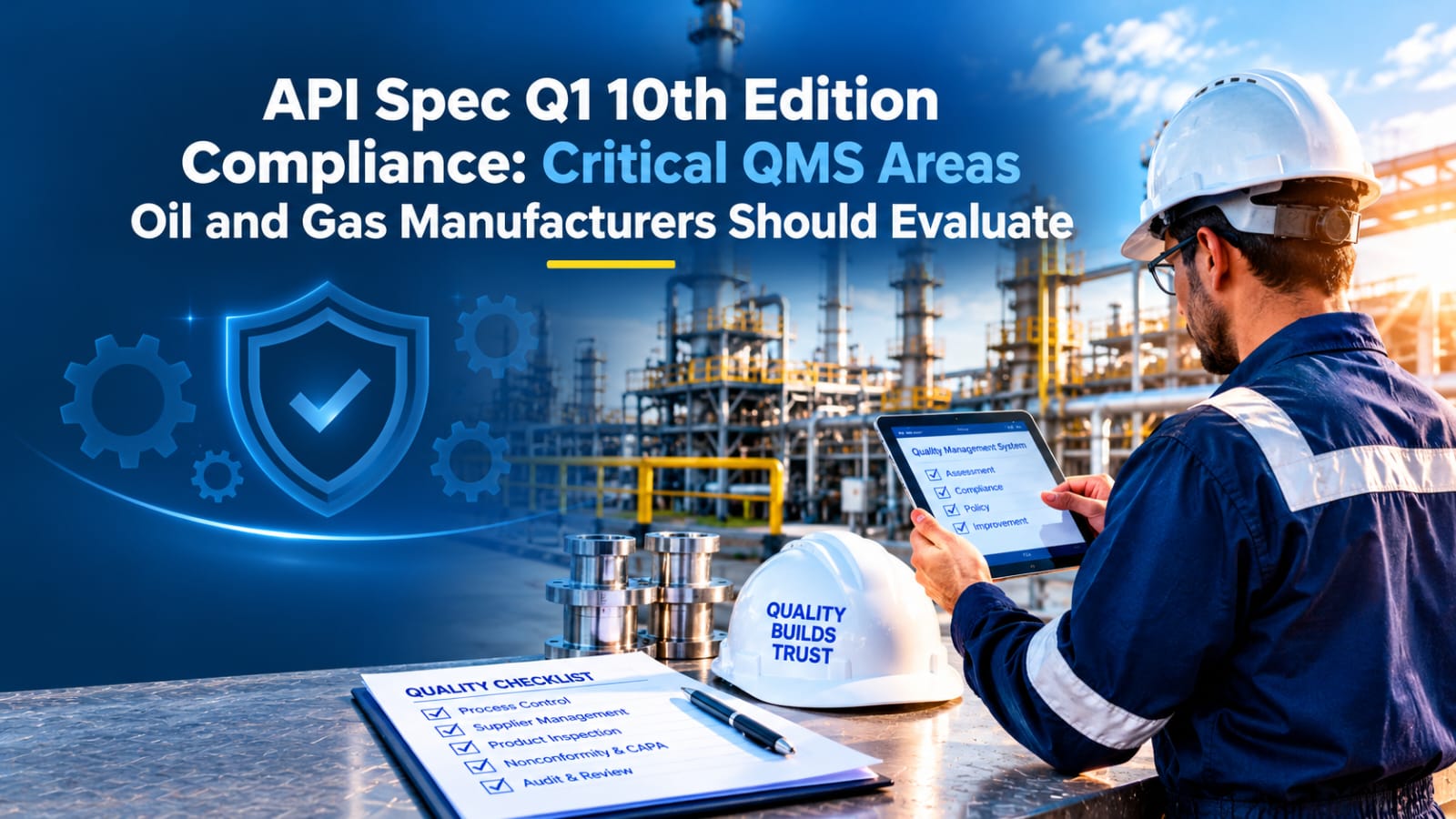
API Spec Q1 10th Edition establishes quality management system (QMS) requirements for organizations providing products for the petroleum and natural gas industry. Understanding these requirements helps manufacturers or companies that provide product related activities evaluate their existing processes and identify areas that need improvement before pursuing certification.
In this blog, we explore the critical QMS areas oil and gas manufacturers should evaluate, common certification mistakes and how Vegas Consulting can support their certification journey.
1. QMS Documentation and Process Control
QMS documentation should reflect actual manufacturing operations or product realization processes rather than exist solely for audit purposes.
Manufacturers or companies that provide product related activities must should evaluate whether their procedures, work instructions and quality records address applicable requirements and are implemented consistently.
Key areas to evaluate:
– Documented procedures and work instructions.
– Defined responsibilities and process controls.
– Accurate quality records.
– Document review and revision control.
2. Risk Management and Change Control
Production interruptions, material shortages, equipment failures and uncontrolled changes can affect product quality and delivery.
Manufacturers should assess relevant risks, establish appropriate controls and manage changes that could affect product conformity.
Key areas to evaluate:
– Risk identification and assessment.
– Actions to address identified risks.
– Contingency planning where required.
– Review and control of relevant changes.
3. Supplier Evaluation and Control
Purchased materials and outsourced processes can directly influence the quality of finished oilfield equipment. Weak supplier controls can introduce problems into the manufacturing process.
Manufacturers should establish appropriate supplier evaluation, purchasing and verification processes based on applicable requirements.
Key areas to evaluate:
– Supplier approval and performance monitoring.
– Verification of purchased materials.
– Control of externally provided processes.
– Records of supplier evaluation and verification.
4. Production, Inspection and Product Acceptance
Manufacturers or companies that provide product related activities must control production activities and verify that products meet applicable specifications before release.
Depending on the product and process, this may involve machining, welding, heat treatment, inspection, testing and other manufacturing activities.
Key areas to evaluate:
– Production instructions and process controls.
– Personnel competence and equipment suitability.
– Validation of applicable special processes.
– Inspection and testing criteria.
– Final product acceptance and required records.
5. Nonconformity Management and Corrective Action
When a product fails to meet specified requirements, manufacturers must identify and control the nonconformity appropriately.
Simply correcting a defective product may not prevent the same problem from recurring. Corrective action should address the underlying cause where required.
Key areas to evaluate:
– Identification and control of nonconforming products.
– Investigation of causes.
– Implementation of corrective actions.
– Verification of corrective action effectiveness.
6. Internal Audits and Management Review
Internal audits help determine whether the QMS meets applicable requirements and operates effectively. Management reviews help leadership evaluate system performance and identify areas requiring attention.
Manufacturers or companies that provide product related activities should ensure that audit findings are addressed and appropriate follow-up actions are completed.
Key areas to evaluate:
– Planned internal audits.
– Audit findings and corrective actions.
– QMS performance monitoring.
– Management review and improvement actions.
5 Common Mistakes That Can Delay API Q1 Certification
Even experienced manufacturers or companies that provide product related activities can encounter certification challenges when their QMS is not effectively implemented.
1. Copying a generic procedures manual: Documentation does not reflect actual manufacturing processes.
2. Documents without evidence: Procedures exist, but required records do not demonstrate implementation.
3. Weak risk and change control: Relevant risks and changes are not adequately assessed or controlled.
4. Ignoring suppliers: Supplier evaluation and control of purchased materials or outsourced processes are inadequate.
5. Skipping internal audits: QMS gaps remain unidentified before the certification assessment.
Addressing these issues early can help manufacturers improve their QMS and prepare more effectively for certification.
Get API Q1 Certification Support with Vegas Consulting
Vegas Consulting is a Dubai-based consultancy supporting oil and gas manufacturers with API certification and QMS implementation. The company reports supporting more than 100 international clients across over 10 countries in the MENA region.
How We Can Help
– Gap analysis: Identify gaps and develop a structured certification roadmap.
– Customized QMS documentation: Develop documentation around your actual processes and applicable requirements.
– Training and internal audits: Help employees understand QMS requirements and assess implementation.
– Nonconformity closure: Support corrective actions and ongoing QMS maintenance.
– ConnIT project management app: Help organize certification activities and track project progress.
Our focus is on practical implementation, effective quality controls and preparation for the applicable certification assessment. We work toward our clients’ goal of first-time certification success.
Conclusion
API Spec Q1 10th Edition compliance requires more than maintaining documentation. It involves effective risk management, supplier controls, production processes, inspection, corrective action and continual evaluation of the QMS.
By reviewing these critical areas and addressing gaps early, oil and gas manufacturers can strengthen their quality management processes and prepare for the applicable certification requirements.
Ready to Start Your API Q1 Certification Journey?
Contact Vegas Consulting to discuss your QMS requirements and explore the next steps toward certification readiness.