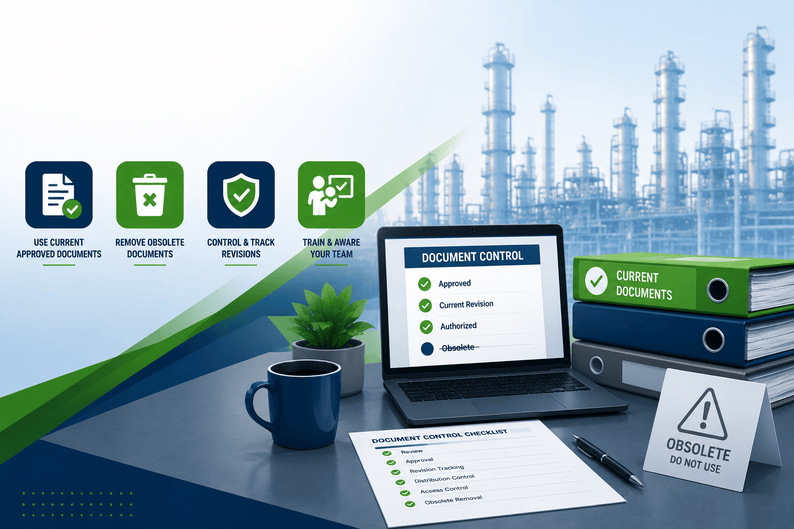
In the oil & gas industry, even a small documentation error can lead to major operational, quality, and compliance failures. One of the most common issues identified during API audits is the unintended use of obsolete documents on the shop floor, in procurement activities, or during field operations.
For organizations implementing an API Q1 quality management system, effective document control is not just an administrative activity—it is a critical operational requirement that directly impacts product quality, traceability, compliance, and customer confidence.
Many companies still struggle with outdated work instructions, expired drawings, uncontrolled specifications, and unmanaged external standards. These gaps often result in audit nonconformities, production delays, rework, and increased operational risk. This article explains how organizations can strengthen their API Q1 document control process and prevent the use of obsolete documents through practical, risk-based strategies.
Why Obsolete Documents Are a Major API Q1 Compliance Risk
Under API Q1 compliance, organizations are required to maintain controlled documentation that ensures personnel always use the latest approved revisions.
When outdated procedures or specifications remain accessible in operations, several risks emerge:
- Manufacturing to incorrect revisions
- Use of outdated customer requirements
- Incorrect inspection criteria
- Procurement errors
- Product traceability failures
- Audit nonconformities
- Increased rework and scrap
- Delays in project execution
Core Prevention Strategies to Eliminate Obsolete Documents
1. Establish a Controlled Document Approval Process
Every controlled document should pass through:
- Review
- Technical approval
- Revision verification
- Authorization before release
Organizations should define:
- Document ownership
- Approval hierarchy
- Revision responsibilities
- Distribution methods
Without clear accountability, obsolete versions can easily remain in circulation.
2. Implement Effective Revision Control
Every document should prominently display its current revision number and date. Maintain a master list or clear records of the current revision status for all quality management system (QMS) documents.
Best practices include:
- Unique revision numbering
- Revision history logs
- Change summaries
- Automated revision notifications
- Controlled access permissions
Personnel must clearly identify:
- Current revision
- Superseded revision
- Effective implementation date
This minimizes the risk of employees referencing outdated instructions.
3. Remove or identify Obsolete Documents Immediately
Obsolete documents must be immediately removed from all points of issue or use. If they are retained for any legal or historical purpose, they must be clearly identified (e.g., marked “OBSOLETE”) to prevent unintended use.
- Shared folders
- Shop floor workstations
- Printed files
- Email attachments
To prevent this:
- Withdraw obsolete documents immediately
- Stamp archived copies as “OBSOLETE”
- Restrict unauthorized printing
- Conduct periodic document verification audits
Physical document removal is especially important in manufacturing environments where printed copies are commonly used.
All documents and subsequent revisions must be reviewed and approved for adequacy by authorized personnel before being released for use. Revisions should generally be approved by the same function that performed the original review.
Practical Best Practices to Prevent Obsolete Documents
1. Use Digital Document Management Systems
Manual systems and spreadsheets often create document control gaps.
Digital QMS platforms help organizations:
- Automate revision tracking
- Control user access
- Issue approval workflows
- Maintain audit trails
- Prevent duplicate versions
Digital systems significantly reduce the risk of obsolete document usage.
2. Train Employees on Document Awareness
Employees should understand:
- How to identify current revisions
- Where to access approved documents
- Risks of using uncontrolled copies
- Document change communication procedures
Awareness training is critical for maintaining operational discipline.
3. Conduct Internal Document Audits
Routine verification activities should confirm:
- Correct versions at workstations
- Removal of obsolete documents
- Proper revision implementation
- Alignment between departments
Internal audits help identify weaknesses before external API audits occur.
4. Control Printed Documents Carefully
Printed copies create major compliance risks.
Best practices include:
- Limited print permissions
- Controlled issue stamps
- Expiry dates on printed documents
- Daily or weekly verification checks
If printed copies are necessary, they must remain tightly controlled.
Why Document Control Failures Lead to API Audit Findings
API auditors commonly identify issues such as:
- Unapproved document revisions
- Obsolete drawings on shop floors
- Uncontrolled external specifications
- Missing revision history
- Inconsistent procedures between departments
These findings indicate weaknesses in the organization’s quality management governance.
Strong API Q1 document control demonstrates:
- Operational consistency
- Process discipline
- Risk management capability
- Commitment to compliance
How Vegas Consulting Supports API Q1 Document Control Implementation
At Vegas Consulting, we help oil & gas manufacturers and service organizations build practical, audit-ready document control systems aligned with API Q1 requirements.
Our support includes:
- API Q1 documentation development
- Revision control system implementation
- Digital QMS advisory
- Internal audit preparation
- External document management frameworks
- Risk-based compliance consulting
We focus on creating operationally effective systems—not just paperwork for certification.